
The expression “blue blood” originated in medieval Spain, under the term sangre azul. It referred to the aristocratic families of Castile, who distinguished themselves from the rest of the population by their very fair complexion. Nobles lived sheltered from the sun and were spared from agricultural labor, and their pale skin made bluish veins more visible, especially on the hands and arms.
This visible trait gradually became a symbol of social distinction: prominent veins came to represent purity of lineage, supposedly preserved from both physical labor and social mixing. Over the centuries, the expression spread across Europe and remained in everyday language to refer to aristocracy. Thus, “blue blood” was never a biological reality but rather a cultural and political marker, reinforced by the idea of superiority associated with elites.
In reality, blood is always red, varying from bright to dark depending on its level of oxygenation. What we see beneath the skin are veins that appear bluish.
An optical illusion caused by the skin
The skin acts as a filter:
- White light striking the skin partially penetrates the tissues
- Longer wavelengths (red light) penetrate deeper and scatter less
- Shorter wavelengths (blue light) are more strongly reflected and scattered by the skin
As a result, what our eyes perceive at the surface are bluish veins even though the blood flowing through them is dark red.
On thin, fair skin , like that of nobles who avoided sun exposure veins become much more visible.
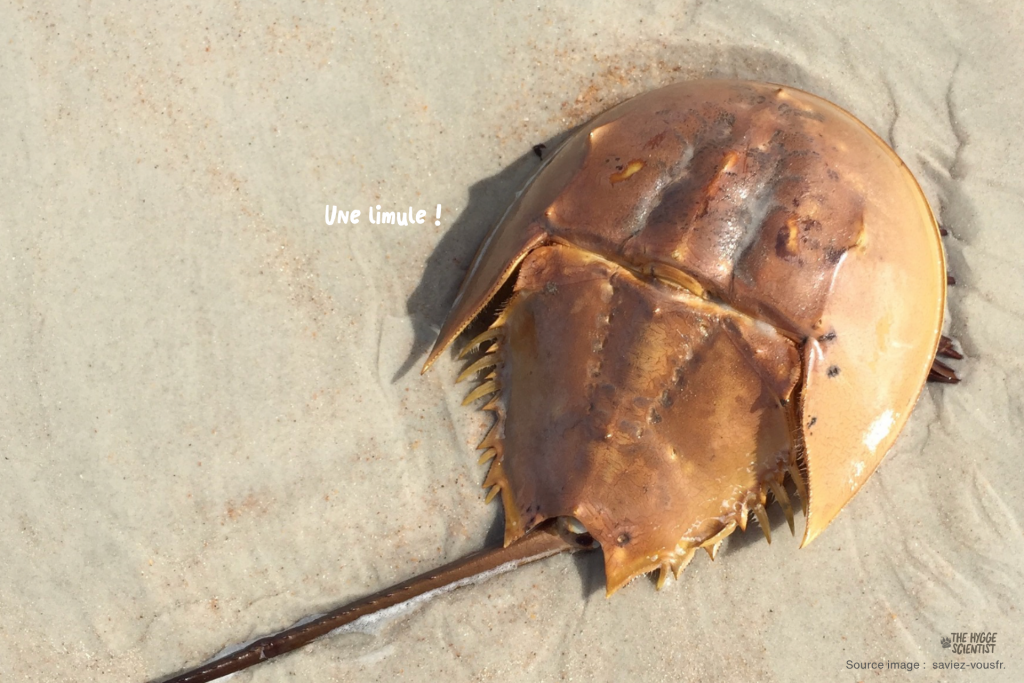
Blue blood truly exists in some animals
Beyond the metaphor, blue blood does exist in nature. In certain marine arthropods, such as horseshoe crabs, blood is not red but blue.
Want to learn more? Here’s an article about the horseshoe crab.